The Prettiest Villages in the Cotswolds: A Local Guide
Honey-coloured cottages, winding country lanes, historic churches and riverside walks have made the villages of the Cotswolds famous around the world. But with so many beautiful places spread across the region, deciding which ones to visit isn't always easy.
Some of the best-known Cotswolds villages deserve their reputation. Others reveal their charm more quietly, away from the busiest visitor routes.
If you're planning a trip and wondering which are the prettiest villages in the Cotswolds, we've selected some of our favourites – from famous landmarks worth seeing at least once to smaller places where thepleasure comes simply from slowing down and exploring.
1. Bibury
Few places are more instantly associated with the Cotswolds than Bibury.
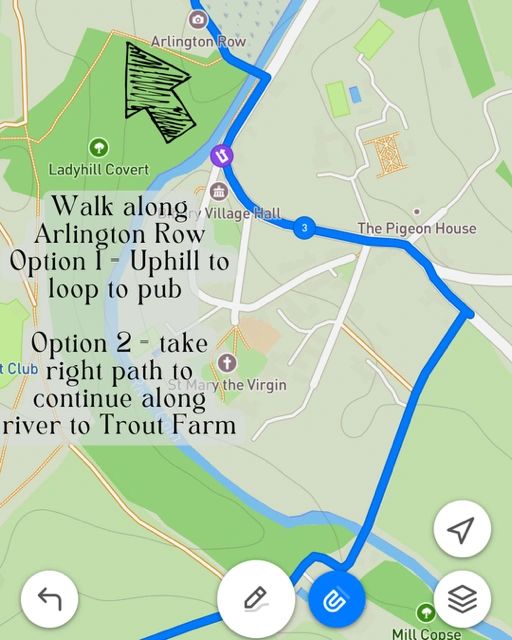
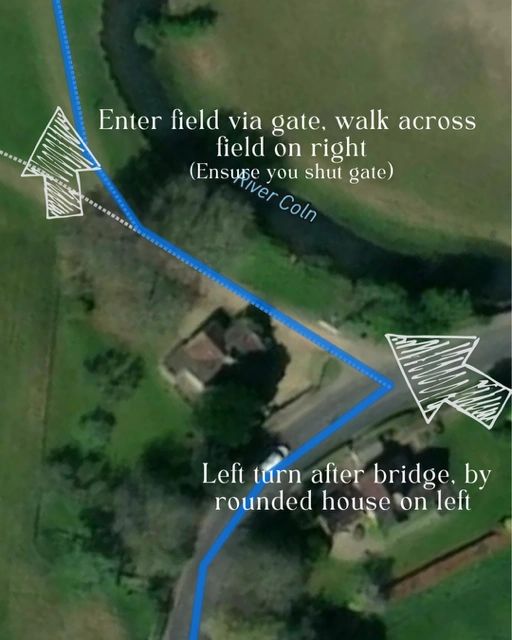
Its most famous sight is Arlington Row, a line of historicstone cottages beside the River Coln that has become one of the most photographed views in the region. The river, stone buildings and surroundingcountryside combine to create the picture-postcard Cotswolds scene manyvisitors have travelled to find. Whether you want a a bite to eat, to experience the magic of feeding the fish or you want to stock up on their delishous smoked trout, the trout farm is a must visit!
Bibury's fame does, however, mean that timing matters.
Visit during the busiest part of a summer's day and theexperience can be very different from arriving when the village is quieter. An earlier or later visit gives you more opportunity to appreciate the setting at a gentler pace.
Bibury is beautiful, but it also provides a good introduction to one of our favourite principles for exploring the Cotswolds: sometimes changing when you visit somewhere can be just as important as deciding where to go.
2. Lower Slaughter
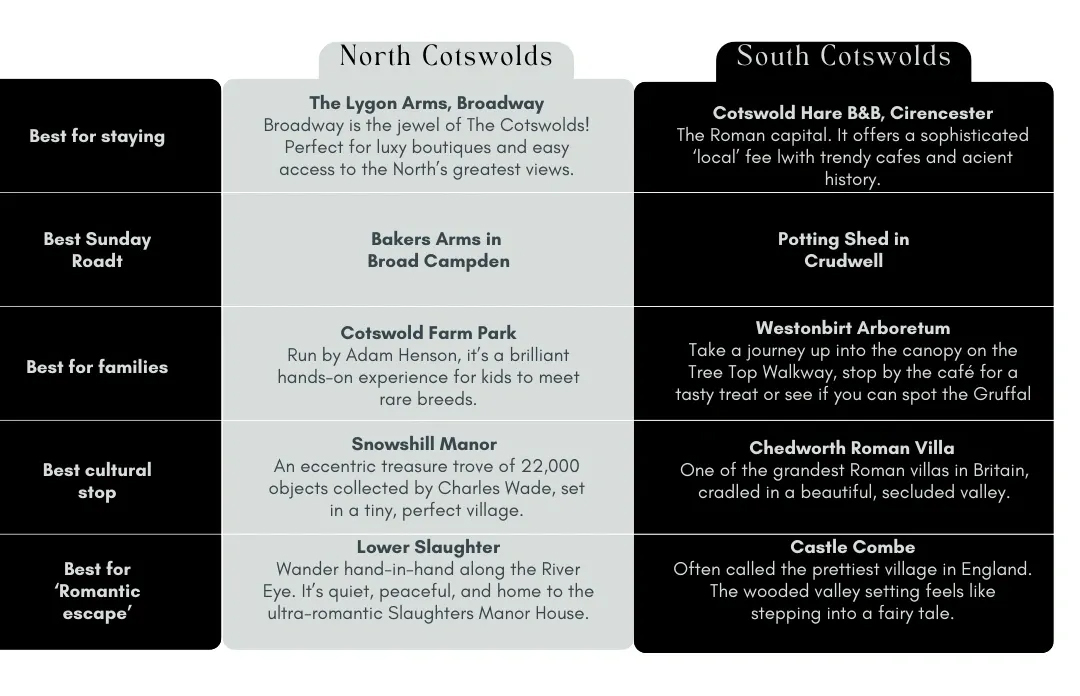
Don't be put off by the name. Lower Slaughter is one of themost peaceful and attractive villages in the Cotswolds.
The River Eye runs through the village, crossed by small stone footbridges and bordered by traditional Cotswold stone cottages. At one end sits the Old Mill, adding another distinctive feature to an already photogenic setting.
Lower Slaughter isn't somewhere you need to race around ticking off attractions. Its appeal is the village itself.
Take a walk beside the river, wander through the quieter lanes and give yourself time to enjoy the surroundings.
For visitors who want to experience the Cotswolds rather than simply photograph it through a car window, Lower Slaughter is an easy place to love.
3. Upper Slaughter
Just a short distance from Lower Slaughter is its smaller neighbour, Upper Slaughter.
The two villages are close enough to combine, but they have subtly different personalities. Upper Slaughter feels particularly peaceful,with historic stone properties arranged around the River Eye and countryside extending beyond the village.
Rather than treating the Slaughters as two quick stops,consider exploring them together at walking pace.
It is a simple way to turn sightseeing into something more memorable – and exactly the kind of experience that can get lost when too many destinations are squeezed into one day.
4. Castle Combe
Castle Combe regularly appears in discussions about the most beautiful villages in England, not just the Cotswolds.
Located towards the southern edge of the Cotswolds, its historic stone cottages descend through the village towards the By Brook. The Market Cross, St Andrew's Church and much-photographed bridge help create are markably well-preserved historic setting.
It has also appeared on screen numerous times, which means parts of Castle Combe can feel strangely familiar even on a first visit.
Like Bibury, its beauty is hardly a secret. Choosing your timing carefully can make a substantial difference to the experience.
And although the classic view towards the bridge attracts most of the attention, don't simply take the photograph and leave. Walking beyond the obvious view point gives you a better sense of the village and its surrounding countryside.
5. Snowshill
If your idea of the perfect Cotswolds village involves a tiny collection of honey-coloured houses surrounded by rolling countryside,Snowshill deserves a place on your list.
Perched in the hills near Broadway, Snowshill has a wonderfully secluded feel.
The village itself is small, which is part of its appeal. There is no enormous checklist of attractions to complete. Instead, you have anattractive church, traditional stone buildings, beautiful countryside and the sense of having stepped away from the busier Cotswolds routes.
Nearby Snowshill Manor and Garden gives visitors another reason to explore this part of the region, while the surrounding landscape is particularly rewarding for walkers.
It's a good example of why the best Cotswolds villages aren't necessarily the places where you can find the most things to do.
Sometimes less is precisely the point.
6. Stanton
Stanton is the sort of village that makes you wonder why more visitors don't stop.
Its long main street is lined with beautifully preserved Cotswold stone houses, with the surrounding hills creating an appropriately rural backdrop. The village has managed to retain a remarkably unspoilt character.
There are no major tourist attractions demanding your attention.
Instead, Stanton rewards a slower wander.
Look at the details in the stonework, explore the lanes and enjoy the fact that you're somewhere that still feels like a Cotswolds village rather than a visitor attraction.
For anyone looking beyond the most famous Cotswolds villages, Stanton is one we'd happily recommend.
7. Guiting Power
Set among the hills of the North Cotswolds, Guiting Power combines traditional Cotswolds architecture with the atmosphere of a livingrural community.
It's attractive without feeling overly polished and peaceful without feeling deserted.
The village sits among excellent walking country, making it particularly appealing if you want to combine exploring Cotswolds villages withsome time outdoors.
Guiting Power is also a good reminder that you don't have totravel between the region's biggest names to have a memorable day.
A smaller village, a country walk, a good lunch and enoughtime to enjoy all three can often provide a much better experience than trying to visit six famous places before sunset.
8. Blockley
Blockley has a noticeably different character from some ofthe better-known villages in the Cotswolds.
Built on rising ground, its stone cottages spread across the hillside, with narrow streets and hidden corners giving the village a more intimate feel.
Its history is also slightly different. While wool shaped much of the Cotswolds, Blockley later became associated with silk production, adding another layer to its story.
Today, it's an excellent place to wander without a rigidplan.
You'll find attractive buildings and countryside views, but Blockley's charm comes from how everything fits together rather than one singlemust-see landmark.
9. Kingham
Kingham offers another side of Cotswolds village life.
Surrounded by beautiful Oxfordshire countryside, the village combines traditional cottages and village greens with a reputation for excellent food and hospitality.
It makes a particularly good choice for visitors who want their Cotswolds experience to involve more than sightseeing.
Spend some time walking, stop for lunch and allow the day tounfold rather than constantly checking where you need to drive next.
Kingham is also useful when planning a Cotswolds itinerary because it can be combined with other destinations in the northern and eastern parts of the region without automatically following the busiest visitor trail.
10. Coln St Aldwyns
For a quieter glimpse of the Cotswolds, Coln St Aldwyns is difficult to beat.
Set within the beautiful Coln Valley, the village hastraditional stone houses, peaceful lanes and lovely surrounding countryside.
It doesn't have the international profile of Bibury – despite being relatively close to it – and that's precisely why we like it.
The contrast between the two can be particularly revealing.
One shows you an iconic Cotswolds view recognised around theworld. The other gives you the opportunity to experience a quieter village at a much slower pace.
There is room for both in a great Cotswolds day.
11. Painswick
Painswick sits among the rolling hills south of Gloucester and has long been known as the "Queen of the Cotswolds".
Its narrow streets are lined with historic stone buildings,while St Mary's Church and its distinctive churchyard are at the heart of the townscape.
Painswick also makes an excellent base for exploring the surrounding countryside, including stretches of the Cotswold Way.
Visitors concentrating entirely on the northern Cotswoldscan easily overlook this part of the region. That's a shame, because Painswick and the surrounding valleys show how much the landscape and atmosphere canchange as you travel through the Cotswolds.
12. Broadway
Broadway is larger and livelier than several villages onthis list, but it's too attractive to leave out.
Its broad High Street is lined with Cotswold stonebuildings, independent shops, galleries, hotels and places to eat, while thesurrounding hills provide one of the most recognisable North Cotswolds landscapes.
Above the village stands Broadway Tower, from where the elevated setting becomes much more obvious.
Broadway works particularly well if you'd like somewhere with more to explore while retaining the architecture and atmosphere people associate with a traditional Cotswolds village.
It's popular for good reason – although, as elsewhere in the Cotswolds, exploring beyond the busiest times can reveal a different side toit.
What is the prettiest village in the Cotswolds?
There isn't really a single answer.
If you want the iconic photograph, you might choose Bibury or Castle Combe.
For riverside charm, Lower Slaughter is difficult to beat.
If you prefer somewhere quieter, Stanton, Snowshill, Guiting Power or Coln St Aldwyns may stay with you longer.
And that's one of the pleasures of exploring the Cotswolds. The village you remember most isn't always the one you expected before you arrived.
Which Cotswolds villages should you visit in one day?
The temptation when planning a Cotswolds day trip is to fitin as many famous names as possible.
We'd suggest resisting it.
The Cotswolds covers a large area, and a route that looksstraightforward on a map can involve narrow roads, busy villages andconsiderably more travelling than expected.
Choosing a handful of places that work naturally togethergives you time to get out, explore and enjoy them.
For example, you might combine villages within the NorthCotswolds, spend a day exploring the Coln Valley and surrounding villages, orconcentrate on the southern Cotswolds rather than attempting to cross theentire region.
There isn't one perfect route for everybody.
What matters is building the day around what you actuallyenjoy.
Famous Cotswolds villages or hidden gems?
Why choose?
Seeing somewhere famous like Bibury for the first time canabsolutely be worthwhile. These places became well known for a reason.
But some of our favourite Cotswolds experiences happenbetween the headline destinations.
A quiet lane. A village you hadn't heard of. A walk throughthe countryside. Lunch somewhere you weren't expecting to find. A conversationwith somebody local.
Combining one or two famous villages with lesser-knownplaces gives you the best of both worlds.
It also helps you experience the Cotswolds as somewherepeople actually live rather than simply a collection of photographs torecreate.
Discover the Cotswolds at your own pace
At Corf Travel, we believe the best Cotswolds tours aren'tabout seeing the greatest number of places in the shortest possible time.
They're about seeing the right places for you.
Our private Cotswolds tours are locally led and shapedaround your interests, whether that means exploring famous villages,discovering quieter corners, walking through the countryside, enjoying localfood or simply taking things at a slower pace.
There's always another village, another lane and anotherview around the corner.
You don't have to see all of them in one day.
Sometimes the best way to experience more of the Cotswoldsis to try to see a little less.



.webp)