
Local Stories, Tips, and Hidden Gems.
At Corf Travel, we’re the boots on the ground.
This page is our unfiltered notebook—a place where we share the stories, secret paths, and local tips that define the region. We’re here to help you discover the area like a VIP, providing you with the "real deal" knowledge you won't find on a standard tour.
No fluff, no crowds, and definitely no selfie-sticks—just the Cotswolds, exactly as they are.
Dreaming of a perfect Cotswolds escape?
Don't just visit – experience it like a local! As your guide to the real Cotswolds, I'm sharing my top 5 hacks to make your trip unforgettable and help you beat the crowds.
Hack 1: Master Your Timing ⏰
The Cotswolds is loved worldwide, and for good reason! But popularity means crowds.
Pro-Tip: Plan visits to iconic spots during off-peak hours (early mornings are magical!) or by weekdays. Plus, some of the most stunning experiences, like vibrant wildflower meadows or cosy pub fires, are seasonal. A little planning ensures you catch the Cotswolds at its finest, giving you a truly relaxed and idyllic trip.
Dates for note ✏️
- Bluebell woods -(March-May)
- Cheltenham Jazz Festival (May)
- Badminton Horse Trials (May)
- Coopers Hill Cheese Rolling (May)
- Garden Openings (Various)
- Summer (June - August)
- Cotswold Lavender Fields (June-August)
- Giffords Circus (May-September)
- Tewkesbury Medieval Festival (July)
- RIAT - Royal International Air Tattoo (July)
- The Big Feastival (August)
- Spectacle of Light at Sudeley Castle (December-January)
- Blenheim Palace Christmas Events (November-January)
Hack 2: Discover Hidden Gems ✨
Beyond the postcards, there's a whole Cotswolds waiting! Skip the queues and find equally breathtaking, less-travelled spots.
How to: Whether you book a local guide (like me at Corf Travel!) who knows all the secret nooks, follow dedicated Cotswold influencers, or just dive deep into your own research, you'll uncover amazing locations and experiences that offer all the charm without the crowds.
Hack 3: Navigate Low Convenience Realities 🚗
Embrace the rural charm, but be prepared! Many parts of the Cotswolds have limited taxi and Uber services, and takeaway delivery options can be scarce or non-existent.
My Advice: Plan your transport in advance, consider hiring a car if you're not on a guided tour, and enjoy the local dining scene directly!
Top tips
- Visiting without a car? Join Facebook group ‘Traveling the Cotswolds without a car
- If you want to ditch the designated driver ask for taxi recommendations when booking meals out and pre book to avoid getting stuck!
- Corf Travel offers travel packages, including airport or city transfers, full and half day tours and transfers for lunch and evening plans - sit back and relax with all your travel sorted ✅
Hack 4: Embrace the Walks 🚶♀️
The best way to truly soak in the Cotswolds' green countryside is on foot! Whether you're conquering stretches of the famous Cotswold Way or simply exploring serene public footpaths, walking offers unparalleled views and tranquility.
Free Resource: Check out cotswolds-nl.org.uk for fantastic free resources to help you discover countless routes by foot.
Hack 5: Be Smart with Opening Hours 🍻
Escaping city life means embracing a different pace! Country pubs and charming restaurants often have specific opening days and hours, and they might not be open all day.
Don't Get Caught Out! Always check opening hours in advance and pre-book where you can, especially for dinner. This avoids disappointment and guarantees you a spot at those coveted local eateries.
Ready to explore the Cotswolds like a seasoned traveller? Follow @CorfTravel for more insider tips, stunning local spots, and guided tours that take you off the beaten path!
The Prettiest Villages in the Cotswolds: A Local Guide
Honey-coloured cottages, winding country lanes, historic churches and riverside walks have made the villages of the Cotswolds famous around the world. But with so many beautiful places spread across the region, deciding which ones to visit isn't always easy.
Some of the best-known Cotswolds villages deserve their reputation. Others reveal their charm more quietly, away from the busiest visitor routes.
If you're planning a trip and wondering which are the prettiest villages in the Cotswolds, we've selected some of our favourites – from famous landmarks worth seeing at least once to smaller places where thepleasure comes simply from slowing down and exploring.
1. Bibury
Few places are more instantly associated with the Cotswolds than Bibury.
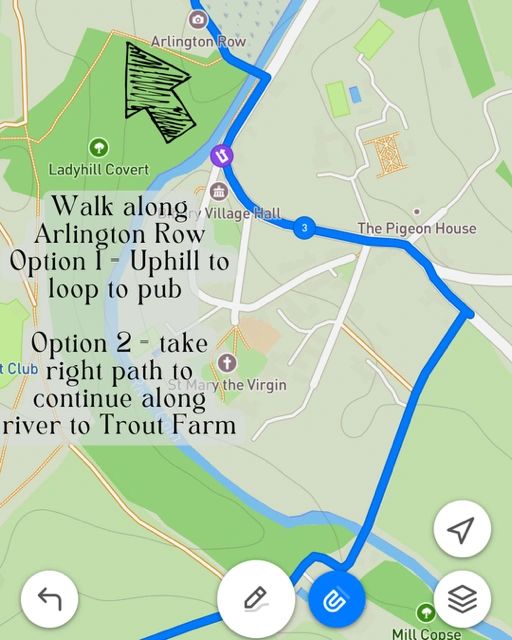
Its most famous sight is Arlington Row, a line of historicstone cottages beside the River Coln that has become one of the most photographed views in the region. The river, stone buildings and surroundingcountryside combine to create the picture-postcard Cotswolds scene manyvisitors have travelled to find. Whether you want a a bite to eat, to experience the magic of feeding the fish or you want to stock up on their delishous smoked trout, the trout farm is a must visit!
Bibury's fame does, however, mean that timing matters.
Visit during the busiest part of a summer's day and theexperience can be very different from arriving when the village is quieter. An earlier or later visit gives you more opportunity to appreciate the setting at a gentler pace.
Bibury is beautiful, but it also provides a good introduction to one of our favourite principles for exploring the Cotswolds: sometimes changing when you visit somewhere can be just as important as deciding where to go.
2. Lower Slaughter
Don't be put off by the name. Lower Slaughter is one of themost peaceful and attractive villages in the Cotswolds.
The River Eye runs through the village, crossed by small stone footbridges and bordered by traditional Cotswold stone cottages. At one end sits the Old Mill, adding another distinctive feature to an already photogenic setting.
Lower Slaughter isn't somewhere you need to race around ticking off attractions. Its appeal is the village itself.
Take a walk beside the river, wander through the quieter lanes and give yourself time to enjoy the surroundings.
For visitors who want to experience the Cotswolds rather than simply photograph it through a car window, Lower Slaughter is an easy place to love.
3. Upper Slaughter
Just a short distance from Lower Slaughter is its smaller neighbour, Upper Slaughter.
The two villages are close enough to combine, but they have subtly different personalities. Upper Slaughter feels particularly peaceful,with historic stone properties arranged around the River Eye and countryside extending beyond the village.
Rather than treating the Slaughters as two quick stops,consider exploring them together at walking pace.
It is a simple way to turn sightseeing into something more memorable – and exactly the kind of experience that can get lost when too many destinations are squeezed into one day.
4. Castle Combe
Castle Combe regularly appears in discussions about the most beautiful villages in England, not just the Cotswolds.
Located towards the southern edge of the Cotswolds, its historic stone cottages descend through the village towards the By Brook. The Market Cross, St Andrew's Church and much-photographed bridge help create are markably well-preserved historic setting.
It has also appeared on screen numerous times, which means parts of Castle Combe can feel strangely familiar even on a first visit.
Like Bibury, its beauty is hardly a secret. Choosing your timing carefully can make a substantial difference to the experience.
And although the classic view towards the bridge attracts most of the attention, don't simply take the photograph and leave. Walking beyond the obvious view point gives you a better sense of the village and its surrounding countryside.
5. Snowshill
If your idea of the perfect Cotswolds village involves a tiny collection of honey-coloured houses surrounded by rolling countryside,Snowshill deserves a place on your list.
Perched in the hills near Broadway, Snowshill has a wonderfully secluded feel.
The village itself is small, which is part of its appeal. There is no enormous checklist of attractions to complete. Instead, you have anattractive church, traditional stone buildings, beautiful countryside and the sense of having stepped away from the busier Cotswolds routes.
Nearby Snowshill Manor and Garden gives visitors another reason to explore this part of the region, while the surrounding landscape is particularly rewarding for walkers.
It's a good example of why the best Cotswolds villages aren't necessarily the places where you can find the most things to do.
Sometimes less is precisely the point.
6. Stanton
Stanton is the sort of village that makes you wonder why more visitors don't stop.
Its long main street is lined with beautifully preserved Cotswold stone houses, with the surrounding hills creating an appropriately rural backdrop. The village has managed to retain a remarkably unspoilt character.
There are no major tourist attractions demanding your attention.
Instead, Stanton rewards a slower wander.
Look at the details in the stonework, explore the lanes and enjoy the fact that you're somewhere that still feels like a Cotswolds village rather than a visitor attraction.
For anyone looking beyond the most famous Cotswolds villages, Stanton is one we'd happily recommend.
7. Guiting Power
Set among the hills of the North Cotswolds, Guiting Power combines traditional Cotswolds architecture with the atmosphere of a livingrural community.
It's attractive without feeling overly polished and peaceful without feeling deserted.
The village sits among excellent walking country, making it particularly appealing if you want to combine exploring Cotswolds villages withsome time outdoors.
Guiting Power is also a good reminder that you don't have totravel between the region's biggest names to have a memorable day.
A smaller village, a country walk, a good lunch and enoughtime to enjoy all three can often provide a much better experience than trying to visit six famous places before sunset.
8. Blockley
Blockley has a noticeably different character from some ofthe better-known villages in the Cotswolds.
Built on rising ground, its stone cottages spread across the hillside, with narrow streets and hidden corners giving the village a more intimate feel.
Its history is also slightly different. While wool shaped much of the Cotswolds, Blockley later became associated with silk production, adding another layer to its story.
Today, it's an excellent place to wander without a rigidplan.
You'll find attractive buildings and countryside views, but Blockley's charm comes from how everything fits together rather than one singlemust-see landmark.
9. Kingham
Kingham offers another side of Cotswolds village life.
Surrounded by beautiful Oxfordshire countryside, the village combines traditional cottages and village greens with a reputation for excellent food and hospitality.
It makes a particularly good choice for visitors who want their Cotswolds experience to involve more than sightseeing.
Spend some time walking, stop for lunch and allow the day tounfold rather than constantly checking where you need to drive next.
Kingham is also useful when planning a Cotswolds itinerary because it can be combined with other destinations in the northern and eastern parts of the region without automatically following the busiest visitor trail.
10. Coln St Aldwyns
For a quieter glimpse of the Cotswolds, Coln St Aldwyns is difficult to beat.
Set within the beautiful Coln Valley, the village hastraditional stone houses, peaceful lanes and lovely surrounding countryside.
It doesn't have the international profile of Bibury – despite being relatively close to it – and that's precisely why we like it.
The contrast between the two can be particularly revealing.
One shows you an iconic Cotswolds view recognised around theworld. The other gives you the opportunity to experience a quieter village at a much slower pace.
There is room for both in a great Cotswolds day.
11. Painswick
Painswick sits among the rolling hills south of Gloucester and has long been known as the "Queen of the Cotswolds".
Its narrow streets are lined with historic stone buildings,while St Mary's Church and its distinctive churchyard are at the heart of the townscape.
Painswick also makes an excellent base for exploring the surrounding countryside, including stretches of the Cotswold Way.
Visitors concentrating entirely on the northern Cotswoldscan easily overlook this part of the region. That's a shame, because Painswick and the surrounding valleys show how much the landscape and atmosphere canchange as you travel through the Cotswolds.
12. Broadway
Broadway is larger and livelier than several villages onthis list, but it's too attractive to leave out.
Its broad High Street is lined with Cotswold stonebuildings, independent shops, galleries, hotels and places to eat, while thesurrounding hills provide one of the most recognisable North Cotswolds landscapes.
Above the village stands Broadway Tower, from where the elevated setting becomes much more obvious.
Broadway works particularly well if you'd like somewhere with more to explore while retaining the architecture and atmosphere people associate with a traditional Cotswolds village.
It's popular for good reason – although, as elsewhere in the Cotswolds, exploring beyond the busiest times can reveal a different side toit.
What is the prettiest village in the Cotswolds?
There isn't really a single answer.
If you want the iconic photograph, you might choose Bibury or Castle Combe.
For riverside charm, Lower Slaughter is difficult to beat.
If you prefer somewhere quieter, Stanton, Snowshill, Guiting Power or Coln St Aldwyns may stay with you longer.
And that's one of the pleasures of exploring the Cotswolds. The village you remember most isn't always the one you expected before you arrived.
Which Cotswolds villages should you visit in one day?
The temptation when planning a Cotswolds day trip is to fitin as many famous names as possible.
We'd suggest resisting it.
The Cotswolds covers a large area, and a route that looksstraightforward on a map can involve narrow roads, busy villages andconsiderably more travelling than expected.
Choosing a handful of places that work naturally togethergives you time to get out, explore and enjoy them.
For example, you might combine villages within the NorthCotswolds, spend a day exploring the Coln Valley and surrounding villages, orconcentrate on the southern Cotswolds rather than attempting to cross theentire region.
There isn't one perfect route for everybody.
What matters is building the day around what you actuallyenjoy.
Famous Cotswolds villages or hidden gems?
Why choose?
Seeing somewhere famous like Bibury for the first time canabsolutely be worthwhile. These places became well known for a reason.
But some of our favourite Cotswolds experiences happenbetween the headline destinations.
A quiet lane. A village you hadn't heard of. A walk throughthe countryside. Lunch somewhere you weren't expecting to find. A conversationwith somebody local.
Combining one or two famous villages with lesser-knownplaces gives you the best of both worlds.
It also helps you experience the Cotswolds as somewherepeople actually live rather than simply a collection of photographs torecreate.
Discover the Cotswolds at your own pace
At Corf Travel, we believe the best Cotswolds tours aren'tabout seeing the greatest number of places in the shortest possible time.
They're about seeing the right places for you.
Our private Cotswolds tours are locally led and shapedaround your interests, whether that means exploring famous villages,discovering quieter corners, walking through the countryside, enjoying localfood or simply taking things at a slower pace.
There's always another village, another lane and anotherview around the corner.
You don't have to see all of them in one day.
Sometimes the best way to experience more of the Cotswoldsis to try to see a little less.

Thinking of a Cotswolds wedding? We don’t blame you!
This stunning Area of Outstanding Natural Beauty (AONB) in southwest England is a picture-perfect setting for saying ‘I do’. From honey-colored stone villages to rolling hills and historic estates, the Cotswolds offers romance, charm, and beauty in abundance. But with so many incredible venues to choose from, where do you even begin?
To help you narrow down the options, we’ve put together a list of 10 of our favorite Cotswolds wedding venues. We’ve covered a range of styles and budgets, and highlighted why each one is a great choice for your big day. We’ve also noted which venues are true Cotswolds gems and will help you really connect with the region’s unique character.
1. Sudeley Castle & Gardens
Area: Winchcombe, Gloucestershire
Style: Grand & Historic
Budget: High / Luxury
Why it’s a Great Cotswold Venue: If you’re dreaming of a fairytale wedding, Sudeley Castle is the ultimate venue. With its rich history (it was home to Queen Catherine Parr!), stunning gardens, and historic architecture, it’s a truly magnificent setting.
2. Cripps Barn
Area: Bibury, Gloucestershire
Style: Rustic & Romantic
Budget: Mid-Range
Why it’s a Great Cotswold Venue: This is our top pick for couples seeking an authentic, Cotswolds-at-its-best experience! Cripps Barn is a stunning stone barn located in the heart of the Coln Valley, an area famed for its unspoiled beauty. What makes this venue so special is its commitment to creating a uniquely Cotswolds celebration. It feels less like a commercial venue and more like a cherished local treasure, giving you a real connection to the place and its people. For those looking for something genuinely special, this is one of our favorite hidden gems. (For other unique, intimate venues with a similar ethos, be sure to check out other Cripps Stone Barn venues!) Cripps & Co have a number of venues to choose from, at the heart of every Cripps & Co. venue is a simple philosophy: remarkable settings, a welcoming atmosphere, and food cooked over fire. (Mr & Mrs Corf got married at Stone barn in 2022 - so we know how amazing this venue is!)
3. The Crown at Ampney Brook
Area: Ampney Crucis, near Cirencester
Style: Boutique Inn / "Rustic-Luxe"
Budget: Low to Mid
Why it’s a Great Cotswold Venue: This beautifully restored inn offers a wonderful blend of traditional charm and modern sophistication. If you're looking for a venue that's both elegant and cozy, The Crown at Ampney Brook is a great choice. The relaxed atmosphere makes it feel less of a venue and more of a welcoming Cotswold home.
4. Euridge Manor (The Lost Orangery)
Area: Chippenham, Wiltshire (Southern Cotswolds)
Style: Whimsical & Mediterranean
Budget: High
Why it’s a Great Cotswold Venue: While Euridge Manor has a distinctly Mediterranean feel, it's still rooted in the Cotswolds landscape. Its unique mix of exotic beauty and English countryside charm makes it a standout venue. This is a brilliant option if you want something that feels out of the ordinary, yet retains that characteristic Cotswold magic.
5. Lapstone Barn
Area: Chipping Campden, Gloucestershire
Style: Modern-Classic Barn
Budget: Mid-Range
Why it’s a Great Cotswold Venue: Lapstone Barn perfectly blends old-world charm with contemporary comfort. The historic barn has been sensitively restored, retaining its original character while offering modern amenities. It feels authentically connected to its surroundings in Chipping Campden, one of the Cotswolds' most loved market towns.
6. The Slaughters Manor House
Area: Lower Slaughter, Gloucestershire
Style: Classic Manor House / Sophisticated
Budget: High
Why it’s a Great Cotswold Venue: Located in what is often called "the most beautiful village in England," The Slaughters Manor House is an iconic Cotswolds venue. It offers timeless elegance and luxury, providing a truly high-end Cotswolds experience. The surrounding village of Lower Slaughter is itself a hidden gem, steeped in history and natural beauty.
7. Cotswolds Under Canvas
Area: Shipston-on-Stour, Warwickshire
Style: Festival / Boho
Budget: Low to Mid
Why it’s a Great Cotswold Venue: For couples looking for something non-traditional and memorable, Cotswolds Under Canvas offers a truly unique experience. The beautiful tipis provide a bohemian and relaxed setting, allowing you to create a personalized celebration in a stunning countryside location. This venue is a hidden gem in every sense, offering a unique connection with the nature and spirit of the Cotswolds.
8. The Frogmill
Area: Andoversford (near Cheltenham), Gloucestershire
Style: Traditional Country Pub / Stylish
Budget: Mid-Range
Why it’s a Great Cotswold Venue: The Frogmill offers a classic, welcoming Cotswolds pub experience. The historic inn has been stylishly updated, providing a charming setting for a wedding. It's a great choice if you're looking for something that's stylish yet informal, perfectly capturing the spirit of a relaxed Cotswold life.
9. Elmore Court
Area: Near Gloucester
Style: Traditional meets Sustainable-Modern
Budget: Mid to High
Why it’s a Great Cotswold Venue: Elmore Court offers a fascinating blend of history and innovation. The traditional manor house contrasts with the sustainable, modern "Gillyflower," which is a perfect space for a large party. It's a venue with real character and a unique story, giving you a chance to celebrate in a truly distinctive Cotswolds setting.
10. Drayton Village Hall
Areas: Sherston Village Hall, Bibury Village Hall (a stones throw from the famous Arlington Row), The Slaughters Village Hall, Broadwell Village Hall (Moreton-in-Marsh),
Style: DIY / Community
Budget: Very Low
Why a village hall is a Great Cotswold Venue: For those with a strict budget, a village hall is a great, affordable option. Providing a blank canvas for you to create your dream wedding. This is a wonderfully down-to-earth and community-focused choice, offering a true connection with the spirit of the local community.
We hope this list has given you some inspiration for your Cotswolds wedding! The Cotswolds is such a diverse region, and we’re confident that with a little bit of research, you’ll find the perfect venue to create your own Cotswold fairytale.
Why not consider a pre or post wedding private tour for your bridal party or newly extended families - extend the celebrations with a tailor made wedding party tour experience.
.webp)
If you’ve spent any time on Instagram or Pinterest, you’ve seen the image: a row of honey-colored stone cottages, a babbling stream, and the quintessentially English charm of Bibury, Cotswold, England.
It is often called "the most beautiful village in England," but for the curious traveler, that title can be a double-edged sword. Most visitors arrive on a big coach, snap the same photo of Arlington Row as a hundred other people, and leave without ever feeling the "spirit" of the place.
At Corf Travel, we do things differently. We believe in showing you the Cotswold AONB (Area of Outstanding Natural Beauty) unfiltered.
Why Bibury is s worth a visit
There is a reason Village Bibury is legendary. Nestled in Bibury, Glos, this village captures the architectural soul of the region. From the 14th-century monastic wool store (the famous Arlington Row) to the crisp waters of the River Coln, it is a masterpiece of preservation.
But to see it at its best, you have to look past the "Top 10" traps.
The Corf Travel Way: Bibury Unfiltered
When you book one of our Cotswold tours, we don't just drop you at the car park with a map. We take you deeper:
- The Inner Circle Timing: We know exactly when the tour buses arrive and, more importantly, when they leave. We’ll show you Bibury, UK in the quiet moments when you can actually hear the river and the birdsong.
- Local stories, no hype: Our private, locally-led tours focus on the history that didn't make it onto the plaques. We talk about the real lives of the weavers who lived in those cottages and the evolution of this landscape.
Active exploration: The Bibury River Walk
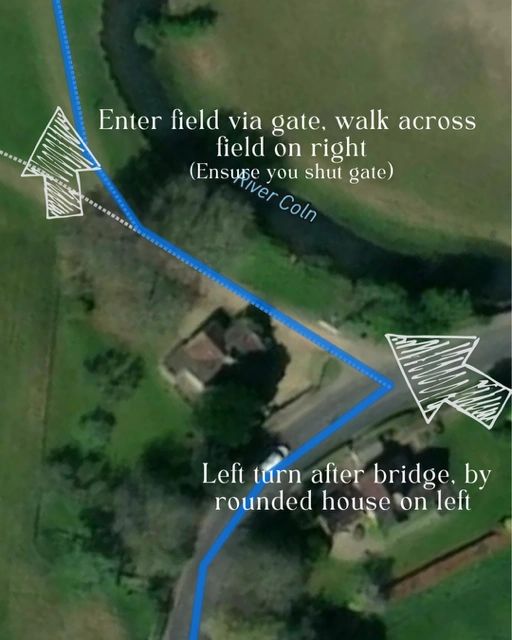
The best way to experience the Cotswold AONB is on foot, away from the paved paths. This gentle 3-mile river walk reveals the village’s hidden charm:
- The Start: We begin in the heart of the village, crossing the crystal-clear River Coln.
- Arlington Row: We pass the iconic weavers' cottages at the perfect moment for a quiet photo.
- The Meadows: The route winds through rolling meadows and water gardens, where the local wildlife—from trout in the stream to soaring buzzards—takes center stage.
- The Finish: We loop back through the quiet back lanes of Bibury, UK, finishing near the historic St. Mary’s Church or a local spot for a well-earned coffee.
- It’s messy, it’s fragrant, and it’s the definition of an authentic English afternoon.
Escape the City: From London to the Heart of the Countryside
Are you staying in the capital? Our Cotswold tour from London is the perfect antidote to the city’s pace. We handle the logistics—including door-to-door service—so you can transition from the Underground to the rolling hills of Bibury, Glos seamlessly.
As a trusted partner for hotels and travel professionals, we pride ourselves on being the "boots on the ground" that ensure guests experience the area’s hidden charm rather than the copy-paste tourist version.
Join the Inner Circle
Don’t settle for the filtered, crowded version of the Cotswolds. See the real stories, meet the real locals, and discover why we love where we live.
Ready to see Bibury properly?
Get in touch to book your private, locally-led tour with Corf Travel.
Follow us on Instagram for more unfiltered views of the Cotswolds: @CorfTravel
Are you travelling to the Cotswolds this spring? Most "Top 10" lists will point you toward the same crowded streets in Bourton-on-the-Water or the selfie-sticks of Arlington Row. But for the curious traveller, the "copy-paste" version of the area isn't the goal.
At Corf Travel, we specialize in private Cotswolds tours that skip the hype. We believe the best things to do in the Cotswolds aren't found in a gift shop—they’re found on a muddy bridleway or in a quiet village pub where the locals actually know each other’s names.
The Best Time for Visiting the Cotswolds: Spring 2026
Spring is a season of transformation, but timing is everything. If you are visiting the Cotswolds over the Easter Bank Holiday (April 3rd – April 6th, 2026), be aware that the "honey-pot" villages will be at peak capacity.
To experience the area’s hidden charm during this window, you have to stray from the main roads. Here is our guide on where to visit in the Cotswolds to find the soul of the region, unfiltered.
Authentic Culture: Beyond the Stately Homes
If you're looking for historical Cotswolds tours, skip the palace queues and look for the stories etched into the landscape.
The Hidden Gem: Sezincote House
This is a startling piece of Mughal Indian architecture tucked into the Gloucestershire hills. In spring, its water gardens offer a quiet contemplation you won't find at the larger estates.
The Ancient Spirit: The Rollright Stones
Visit the stones at sunrise. With 5,000 years of history and no velvet ropes, it’s a visceral way to experience the region's heritage without the museum-style barriers.
Active Exploration: Wild Garlic & Bluebell Woods
The best things to do in the Cotswolds often involve nothing more than a long coffee followed by a walk.
The Route: Guiting Power to the Winchcombe Way
Start in the village of Guiting Power. After a flat white at the local post office, head out toward the Winchcombe Way.
The Experience: Foxholes Nature Reserve
Instead of paved paths, wander into Foxholes. By late April, the forest floor is a wild carpet of bluebells. It’s messy, it’s fragrant, and it’s the definition of an authentic English spring.
For Families: Experience a Real Working Landscape
Forget the curated petting zoos. When travelling to the Cotswolds with family, show them the real rhythm of the countryside.
Where to go: Miserden and Bisley
Explore the lanes around these working farming communities. A simple walk along a public bridleway offers a front-row seat to lambing season—raw, educational, and completely unscripted.
The "No Hype" Pub Guide: Where the Locals Refuel
The best Cotswold villages are the ones that still serve their community. If you’re looking for a genuine atmosphere, these four spots are our top recommendations for 2026:
The Hollow Bottom, Guiting Power
Deeply connected to the local racing community, this spot is authentic and lively. It’s the perfect place to experience the "racing spirit" of the hills.
The Bear Inn, Bisley
A 16th-century former courthouse and the definition of a "hidden gem." It features roaring fires and a menu that champions local farmers.
The Black Horse Inn, Naunton
While the Slaughters are swamped with tourists, this Donnington Brewery pub offers riverside peace and proper local ales without the crowds.
The Woolpack, Slad
Famous for its Slad Valley views and its connection to Laurie Lee, this is a "proper boozer" with an incredible seasonal menu.
Romance in the Cotswolds: Riverside Solitude
If you are looking for where to visit in the Cotswolds for a romantic escape, skip the crowded bridges of Bourton. Head to Naunton instead. It offers the same honey-coloured stone and the gentle River Windrush, but with a fraction of the footfall. It’s the perfect place for those who want space to breathe.
Experience the Cotswolds, Unfiltered
Whether you are a traveller looking for locally-led private tours or a travel professional seeking a trusted partner for your guests, Corf Travel reveals the spirit of the area that the guidebooks miss.
Ready to join the inner circle?
Contact us today to book your private tour or to discuss bespoke itineraries for your guests.
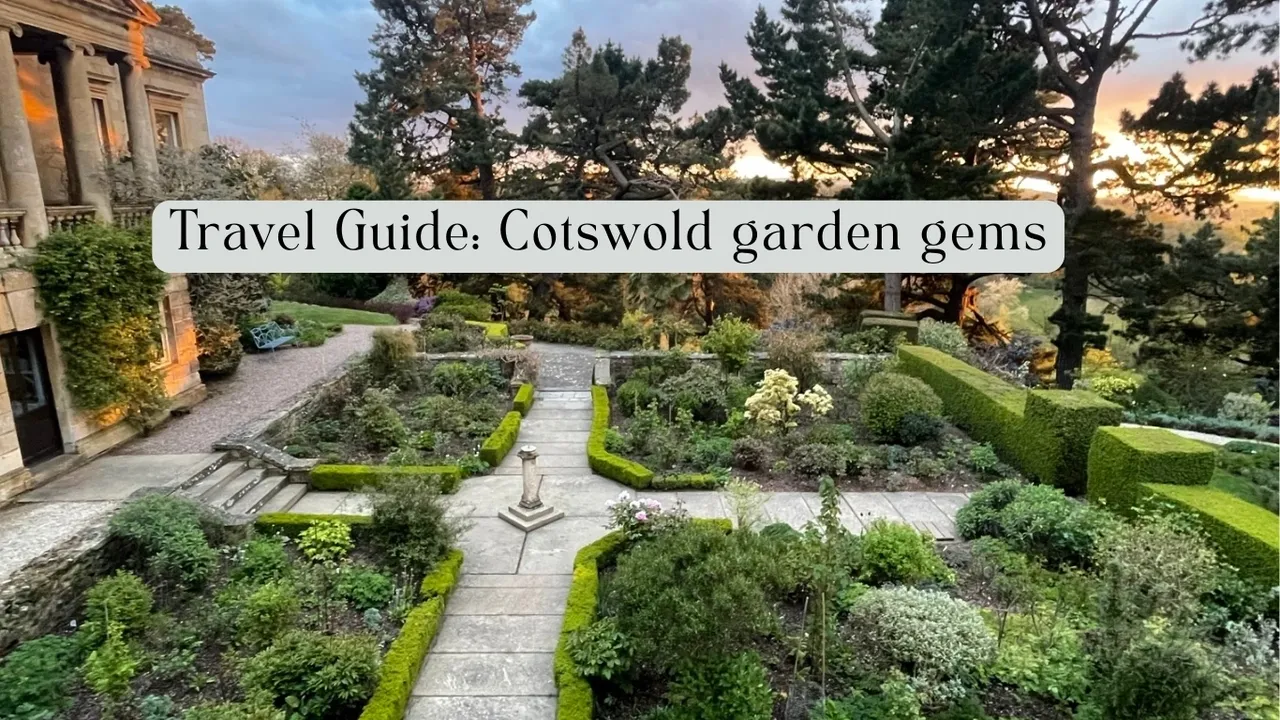
When deciding where to visit in Cotswolds, many travelers overlook the smaller, private estates in favor of major landmarks. However, the most magical things to do in Cotswolds often involve stepping behind the honey-colored stone walls of these "secret" gardens.
1. Hidden gems near Burford
If you are looking for things to do in Burford, a short drive will take you to some of the most exclusive greenery in the region:
• Thyme Hotel (Southrop): A "village within a village" featuring a world-class working kitchen garden. It is a must-see for those interested in sustainable land management.
• Kiftsgate Court Gardens: Located near Chipping Campden, this is a staple for Cotswold tours focusing on female horticultural history and the famous Kiftsgate Rose.
2. Architectural Wonders and Royal Estates
For a more grand experience, these are frequently cited as the best places to visit in Cotswolds:
• Blenheim Palace Gardens: features over 90 acres of formal gardens and more than 2,000 acres of parkland. The grounds are a masterpiece of landscape design, featuring 18th-Century 'Capability' Brown vistas alongside 20th-century formal terraces.
• Highgrove Gardens (Tetbury): The private residence of King Charles III. If you are visiting the Cotswolds between April and October, a pre-booked tour here offers unparalleled prestige.
• Sezincote House: A unique Mogul-Indian palace that offers a distinct visual break from the traditional English cottage style.
3. Our favourite 'off-the-beaten-path' gardens
If you want to avoid the crowds, add these to your list of where to visit in Cotswolds:
• Cerney House Gardens: A romantic Victorian walled garden in North Cerney, perfect for a peaceful afternoon.
• Rousham House & Gardens: A "purist’s" garden with no tea room or gift shop—just 18th-century landscape design in its original form.
Planning your visit
When searching for things to do in Cotswolds, remember that many of these gardens have seasonal opening hours.
• Best time for Roses: June and July (Kiftsgate, Blenheim).
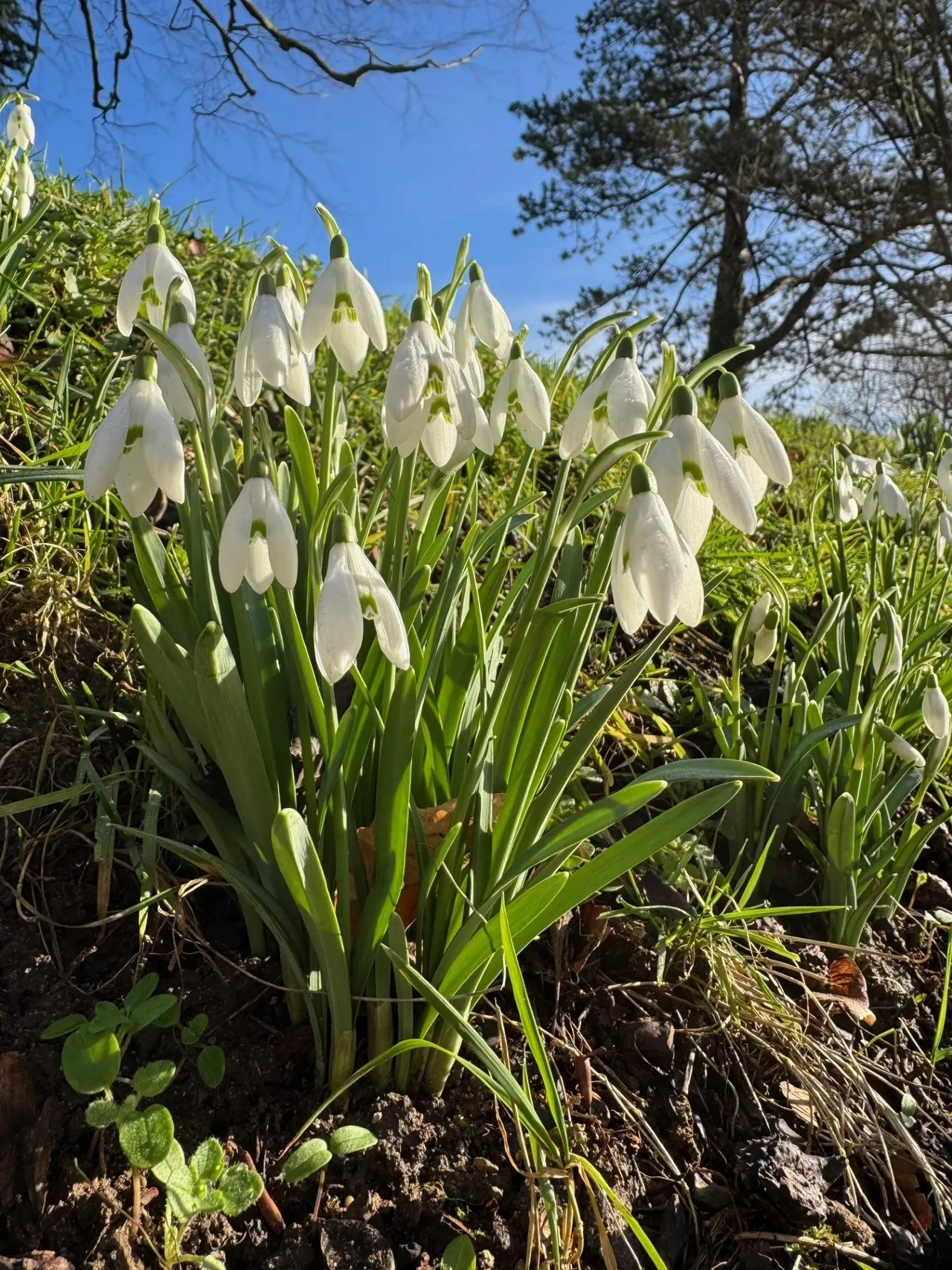
• Best time for Snowdrops: February (Painswick Rococo, Cerney House).
• Best time for Bluebells. Mid-April to early May (National Trust - Bradbury, Foxholes)
: February (Painswick Rococo, Cerney House).
• Pro Tip: If you are staying in the "Gateway to the Cotswolds," there are plenty of historic things to do in Burford, including exploring its medieval church gardens and the nearby Cotswold Wildlife Park gardens.
Would you like me to create a custom 3-day itinerary for "visiting the Cotswolds" that links these gardens together by location? Get in touch with Corf Travel and one of the team will help build your perfect Cotswold experience.
If you’ve only seen the Cotswolds in July, you haven’t really seen the Cotswolds. You’ve seen a beautiful stage set crowded with selfie sticks and ice cream queues.
But right now? It’s February. The air is crisp, the limestone glows with a muted, silver light, and the first signs of life are breaking through the frost. This is the season of the snowdrop—the "Fair Maid of February." For those of us who prefer a quiet fire and a private trail to a tourist trap, this is the absolute best time to be here.
The "White Carpet" Without the Crowd
While the masses wait for the roses of June, we’re out tracking the Cotswolds’ most delicate spectacle. There are no cliches here—just millions of tiny white bells colonizing hidden valleys. Here is where we take our guests to see them properly:
- Colesbourne Park: Often called "England’s Greatest Snowdrop Garden." With over 350 varieties, it’s a masterclass in subtle beauty. We time our visits to miss the weekend peaks, ensuring you actually hear the wind in the trees rather than other people's ringtones.
- Cerney House Gardens: This is the antidote to the "stately home" experience. It’s a romantic, slightly wild Victorian walled garden where snowdrops grow in abundance alongside hellebores. It feels like a secret you weren't supposed to find.
- Painswick Rococo Garden: Famed for its 18th-century "theatrical" design. While it’s popular, its hidden valley layout means we can always find a quiet corner to admire the Galanthus ‘Atkinsii’—a tall, honey-scented variety discovered right here in the 1800s.
Better Pubs, No Rushing
The "Better Pubs" part of our motto really comes into its own in the spring. In the summer, you're lucky to find a stool at the bar. In February and March, the pubs return to the locals.
Imagine finishing a private walk through the Slad Valley and stepping into The Woolpack. There’s a roaring log fire, a pint of local ale that hasn't been rushed, and a table waiting for you—no reservations required six months in advance.
"There is a specific kind of magic in a Cotswold pub when the windows are steamed up, the stone floor is worn smooth by centuries of boots, and you have the place nearly to yourself."
------ ------ ------ ------ ------ ------ ------ ------ ------ ------ ------ ------ ------ ------ ------ ------ ------ ------ ------ ------ ------ ------ ------ ------ ------ ------ ------ ------
Why "Out of Season" is the Only Way to Travel
The Cotswolds is an Area of Outstanding Natural Beauty, but beauty is hard to appreciate when you're looking over someone's shoulder. Visiting in the early spring offers:
- Authenticity: You see the villages as they actually are—working communities, not museum pieces.
- The Light: Low winter sun hitting honey-colored stone creates a glow that summer’s harsh midday sun simply can’t match.
- The Wildlife: It’s the season of newborn lambs in the fields and red kites circling the thermals.
Let’s Go for a Walk
We don’t do "one size fits all" tours. We do private, curated days out for people who want to skip the gift shops and find the real soul of the English countryside.
Would you like me to put together a custom itinerary for a February snowdrop tour, including my shortlist of the best fireside pubs for a long Sunday lunch?
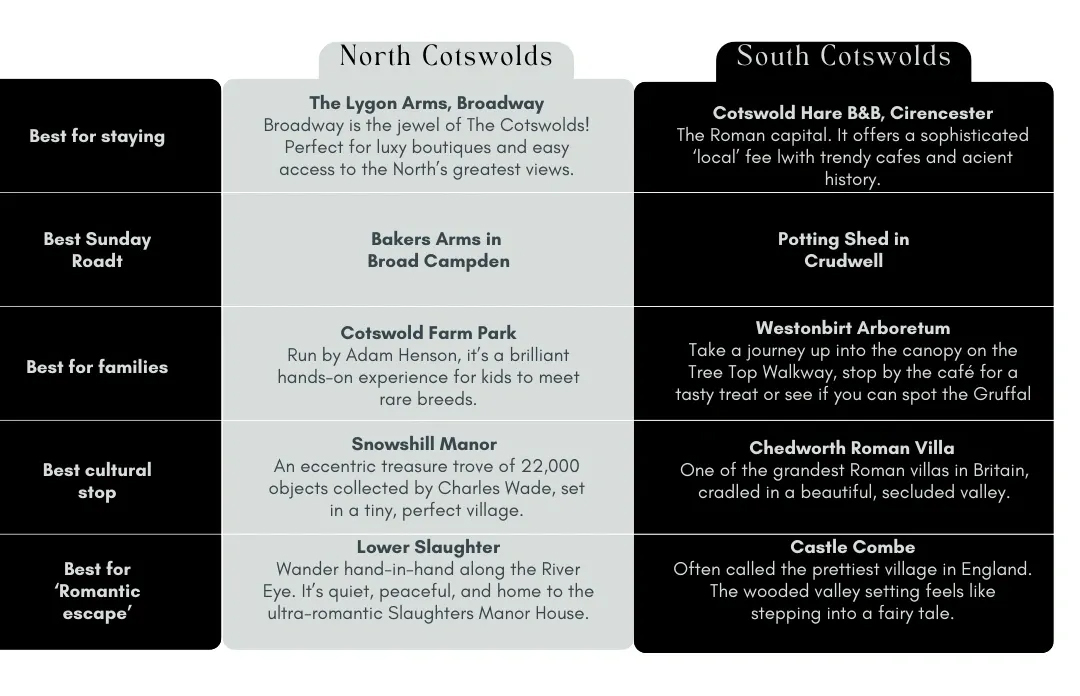
When most people dream of the Cotswolds, they picture a singular, golden-hued landscape. But look closer, and you’ll find two distinct personalities. At Corf Travel, we specialize in helping you navigate these differences to find the version of the Cotswolds that speaks to you.
The North: Quintessential & Grand
The Northern Cotswolds is the "High Cotswolds." Think dramatic escarpments, expansive views, and the most iconic "wool towns." This is where you find the deepest honey-colored stone and a bustling, polished energy. It feels grand, historic, and undeniably classic.
The South: Wild, Wooded & Secret
As you move South, the landscape softens into deep, wooded valleys and "hidden" combes. It feels more intimate, rugged, and lived-in. While the North has the famous market squares, the South has the quirky artisan spirit of the Stroud valleys and the Roman grandeur of Cirencester.
Your Local Guide: Best of the Best
To help you plan your journey, we’ve hand-picked our favorite spots across both regions.
A Cotswold Tour Essential: Blenheim Palace and the Churchill Connection
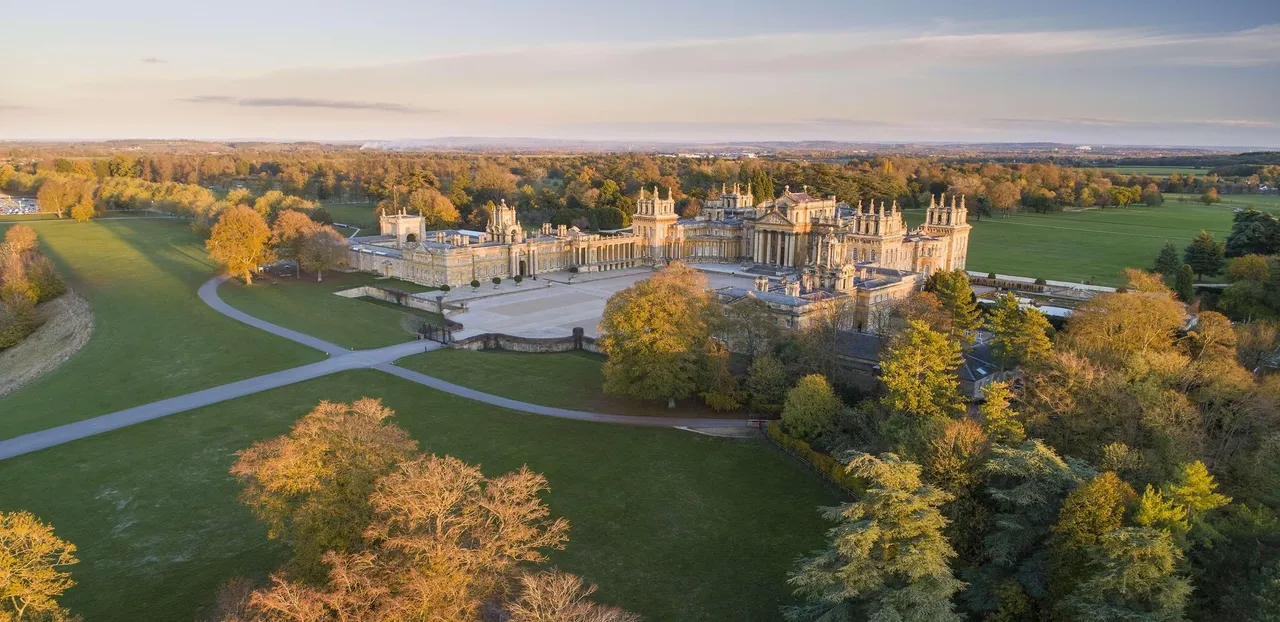
If you’re planning a tour through the Cotswolds — that golden-stoned slice of English countryside — there’s one stop you simply must make time for: Blenheim Palace.
Nestled just outside the charming market town of Woodstock, Blenheim isn’t just another stately home. It’s one of Britain’s grandest country estates, a UNESCO World Heritage Site, and the birthplace of one of the most significant figures in modern history — Sir Winston Churchill.
A Palace with Power and Beauty
Built between 1705 and 1722, Blenheim Palace was a gift from Queen Anne to John Churchill, 1st Duke of Marlborough, for his victory over the French at the Battle of Blenheim. Designed by Sir John Vanbrugh and Nicholas Hawksmoor, the palace is an architectural masterpiece — a bold blend of baroque drama, military triumph, and English elegance.
When you walk through the grand courtyards and step inside the State Rooms, you can almost feel the weight of history. Ornate ceilings, gilded plasterwork, and portraits of generations of Churchills gaze down as you move through centuries of stories.
Outside, the landscaped gardens by Capability Brown are nothing short of breath-taking. Rolling lawns sweep down to a great lake, and on a sunny day it’s easy to see why this estate has inspired artists and filmmakers alike.
Following in Churchill’s Footsteps
For many visitors, the most moving part of Blenheim isn’t just the architecture — it’s the personal connection to Winston Churchill, the wartime Prime Minister whose leadership shaped the course of the 20th century.
Churchill was born here in 1874, quite by accident, when his mother went into labour during a family visit. His birth room can still be seen today, along with exhibitions about his life, achievements, and deep affection for Blenheim.
A short walk from the palace takes you to St. Martin’s Church in nearby Blenheim Park, where Churchill is buried alongside his beloved wife, Clementine. It’s a simple, peaceful resting place that contrasts beautifully with the grandeur of the palace — and it’s a must-see for anyone interested in history.
Make It Part of Your Cotswold Adventure
If you’re touring the Cotswolds — perhaps wandering through Burford, Stow-on-the-Wold, or Chipping Campden — Blenheim Palace makes a perfect day stop. Plan to spend several hours exploring the palace, gardens, and the lakeside walks, then enjoy a traditional cream tea in Woodstock before heading on.
A visit to Blenheim adds depth and historical resonance to any Cotswold itinerary. It connects the tranquil beauty of the region with the larger story of Britain — from the victories of the Marlboroughs to the indomitable spirit of Churchill himself. Blenheim has an array of year round events, the Christmas lights are not to be missed if you visit between Friday 14th November 2025 - Saturday 3rd January 2026.
So as you map out your Cotswold adventure, make sure you take the time for Blenheim Palace. It’s not just a visit — it’s a journey through English history, politics, and heritage, all set in one of the most stunning landscapes in the country.
Ben, Founder of Corf Travel
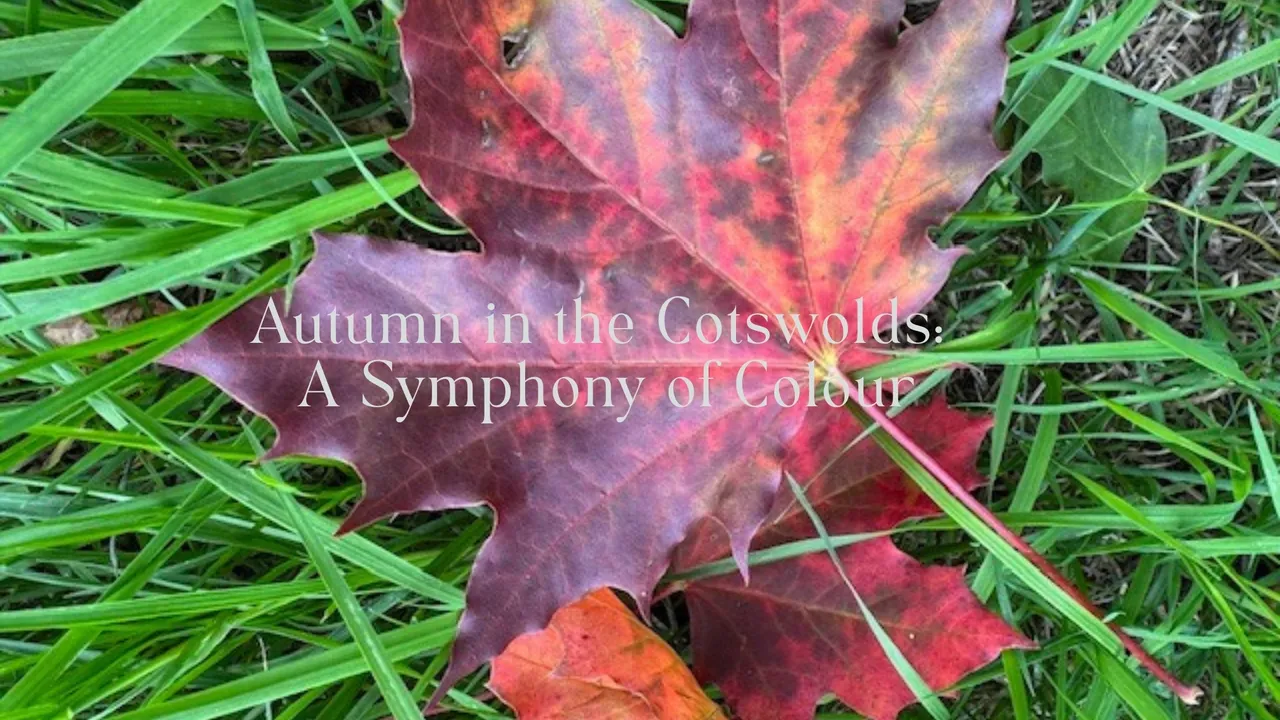
There’s something truly magical about the Cotswolds in autumn. As summer fades and the air turns crisp, the rolling hills and honey-stone villages of this beloved region take on a new character. The landscape transforms into a painter’s dream — a patchwork of russet, gold, amber, and crimson that glows beneath the soft, slanting sunlight of October and November.
A Landscape Transformed
Driving through the narrow lanes that wind between villages like Broadway, Bourton-on-the-Water, and Kingham, you’re surrounded by a blaze of colour. Beech and oak trees form fiery canopies over the roads, while ivy creeps up Cotswold stone walls in deep shades of red. Morning mists hang low over the meadows, and as they lift, the countryside reveals its autumn finery — glistening hedgerows heavy with berries and fields dotted with grazing sheep against a backdrop of glowing woodland.
Westonbirt, The National Arboretum
No autumn journey through the Cotswolds would be complete without a visit to Westonbirt, The National Arboretum, near Tetbury. Established in the 19th century, Westonbirt is home to over 2,500 species of trees from around the world — and autumn is its showtime. The Acer Glade bursts into an astonishing display of scarlet, gold, and tangerine as the Japanese maples ignite the landscape.
The Treetop Walkway, offering sweeping views across the canopy, is particularly breathtaking at this time of year. As you stroll high above the forest floor, you can watch the sunlight filter through the fiery leaves — a living mosaic that seems to shimmer in the breeze.
There’s a stillness at Westonbirt in autumn that’s both invigorating and reflective. It’s the kind of place where you can wander for hours, camera in hand, losing yourself in the splendour of nature’s final flourish before winter sets in.
Batsford Arboretum: A Hidden Gem
Further north near Moreton-in-Marsh lies the Batsford Arboretum, a smaller but equally enchanting retreat. Once part of the estate of the Mitford family, Batsford’s charm lies in its peaceful atmosphere and varied landscape. The arboretum’s steep valleys and meandering paths offer surprises at every turn — from golden larches to flaming maples and the soft yellows of birches swaying gently in the breeze.
In autumn, Batsford’s reflections shimmer across its ponds, creating mirror-like scenes that photographers adore. The view from the upper paths across the Evenlode Valley is particularly lovely in late afternoon light, when the whole landscape seems to glow. After exploring, the Garden Terrace Café is the perfect place to warm up with a hot drink while enjoying views across the arboretum.
Villages dressed for Autumn
Beyond the arboreta, the Cotswold villages themselves take on a new kind of beauty in autumn. The honey-coloured cottages of Chipping Campden, Snowshill, and Upper Slaughter look even warmer under the amber light of the season. Pubs like the Baker’s Arms in Broad Campden or the King’s Head in Bledington invite you in with roaring fires and hearty seasonal menus — the perfect places to rest after a long walk through fallen leaves.
A Season for the Senses
Autumn in the Cotswolds is not just about what you see — it’s about what you feel. The scent of woodsmoke curling through the air, the crunch of leaves underfoot, the distant sound of rooks returning to roost — all combine to create a sense of timelessness. It’s the kind of beauty that encourages you to slow down, breathe deeply, and simply take it all in.
Whether you’re exploring the grandeur of Westonbirt, wandering the quiet paths of Batsford, or simply driving through the golden lanes between Cotswold villages, autumn here is a feast for the senses.
It’s a reminder that even as the year draws to a close, nature still has one final, spectacular performance to give — and the Cotswolds is one of the finest stages on which to see it.
Ben Corfield, Founder of Corf Travel